Geneva Day Tours
I’m Serious Day Tour Man AI, your day trip expert. Ask me anything — where to go, how to get there, and what’s actually worth your day.
Geneva’s day-trip geography ignores the border completely: Mont Blanc’s cable-car empire is an hour away in France, the canal town they call the Venice of the Alps is forty minutes in the same direction, and Europe’s most-visited castle stands in Swiss water at the far end of the lake, past vineyard terraces a thousand years old.
The city’s own headline attraction is free and requires a reservation to a parallel universe: CERN’s Science Gateway, where the booking mechanics — and the truth about the guided tours everyone wants — are laid out below.
Here’s what’s worth a day, with real times and honest trade-offs.

Popular Day Trips
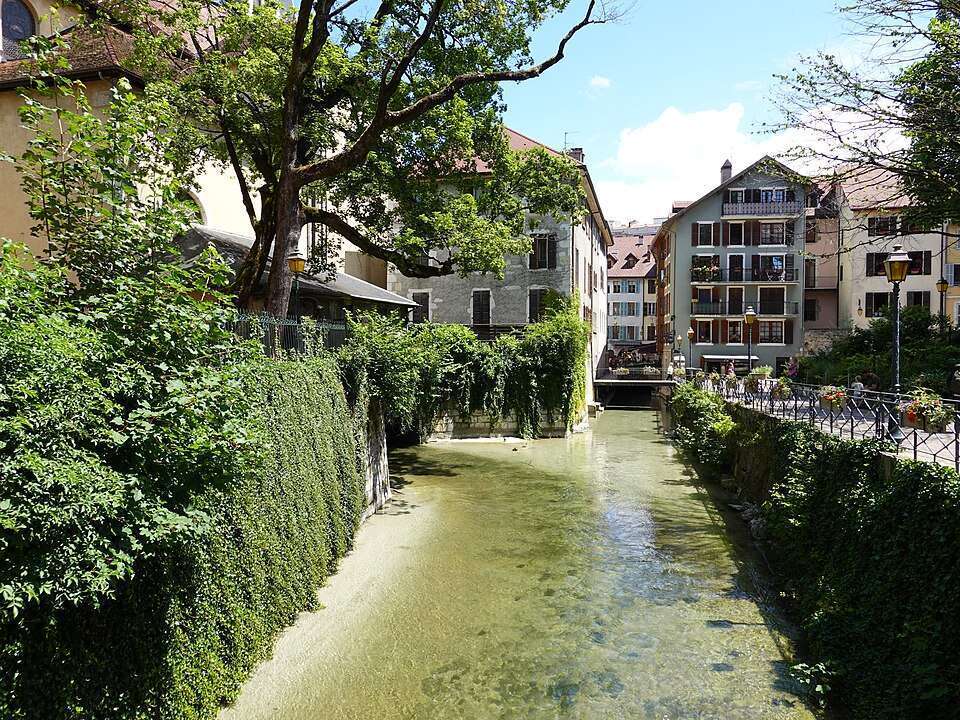
Annecy
The Canal Town, the Lake Lido
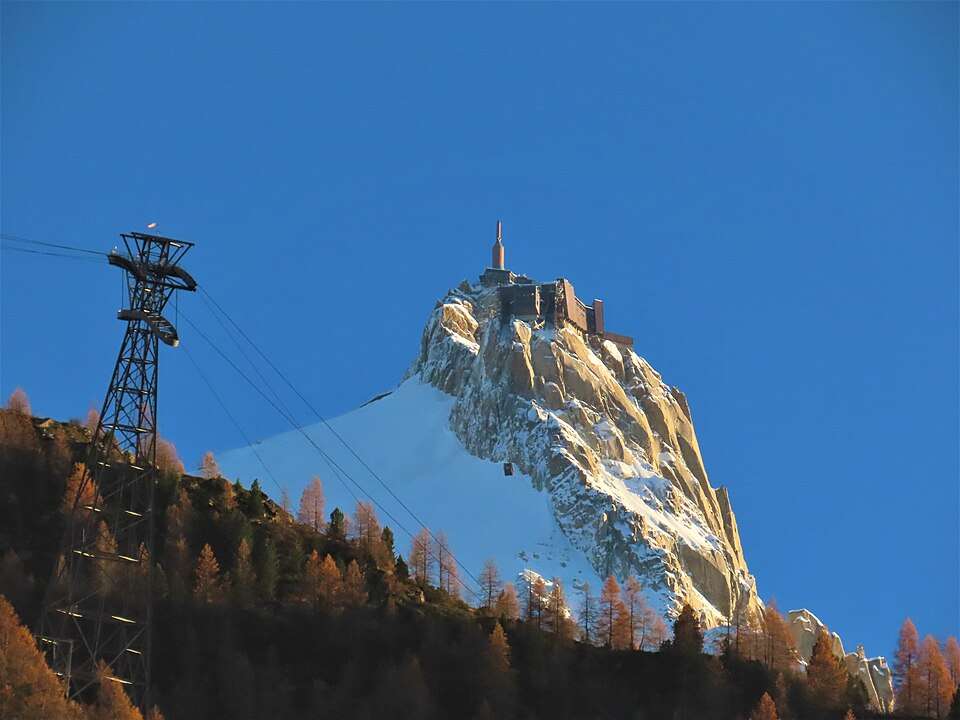
Chamonix
The Hour to the Alps, the Aiguille du Midi
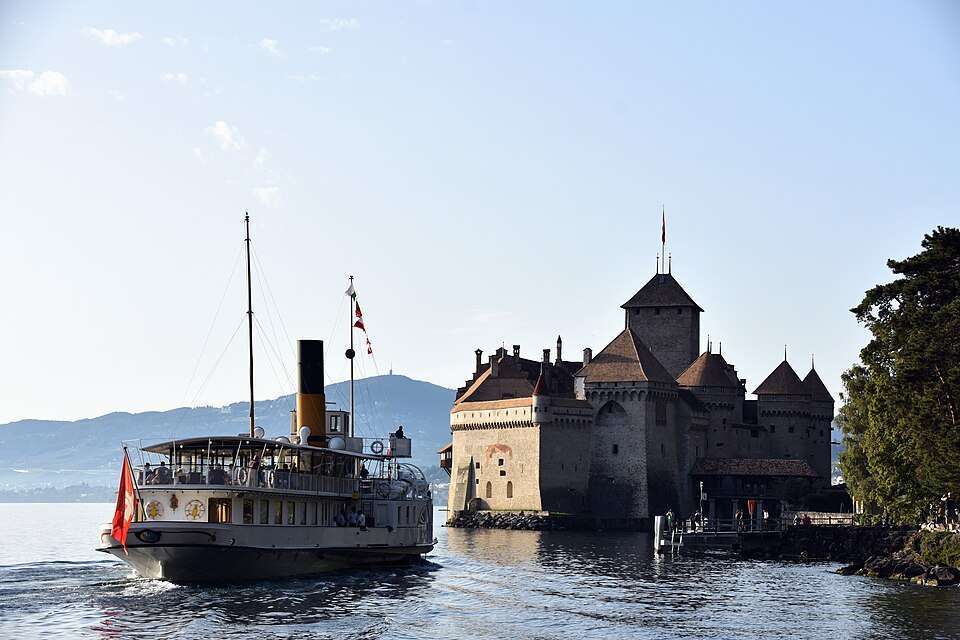
Montreux & Chillon
The Right-Side Window, the Lakeside Walk
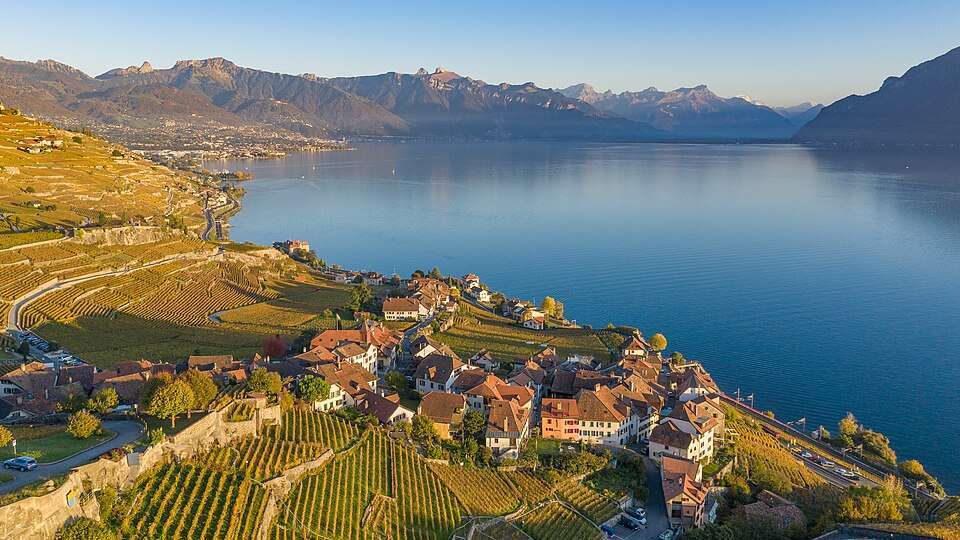
Lavaux
The Walk Between Stations, a Thousand Years of Terraces
Gruyères
The Tight Connections, the Cheese Religion
Yvoire
The Nyon Ferry Trick, a Village in Flowers
Chamonix & the Aiguille du Midi — The Mont Blanc Day
An hour southeast across the French border (carry ID; the crossing is usually a wave-through), Chamonix is alpinism’s capital, and the Aiguille du Midi cable car is its signature: two stages to 3,842 meters, from valley pines to glacier world in twenty minutes, with Mont Blanc’s summit dome close enough to study. The terraces, the ridge tunnels, and the “Step into the Void” glass box over a kilometer of air fill the summit hour.
The mechanics: book the cable car online ahead in season — fine-weather days sell out, and the reservation is for the ascent slot — go early both for light and afternoon-cloud odds, and treat the altitude with respect: 3,842 meters arrives fast, so move slowly, hydrate, and expect winter temperatures on the summit terraces in August. Weather rules absolutely; the webcams the morning-of are the deciding vote, and the mid-station Plan de l’Aiguille (with its balcony trail toward Montenvers) is the honest consolation on half-clear days.
The stack: the Montenvers rack railway to the Mer de Glace — France’s largest glacier, with the ice-cave galleries and the sobering markers showing where the ice reached decades ago — and the town’s mountaineering museum and terrace economy. Full day, book-ahead day, and the single biggest-payoff trip on this list.
Read the full Chamonix day-trip page.
Lavaux, Montreux & Chillon — The Riviera East
The lake’s north shore stacks the Swiss Riviera into one train line. Lavaux first: the UNESCO-listed vineyard terraces — a thousand years of dry-stone walls stepping into the lake between Lausanne and Vevey — walked village-to-village (Lutry to Cully is the classic hour-plus) with tasting caveaux pouring the Chasselas that rarely leaves the country. The little tourist trains handle the no-walk version; the vineyard light in late afternoon handles the photography.
Montreux, twenty minutes on, runs the palm-lined promenade its microclimate earned, the Freddie Mercury statue at the water (the town’s adopted son; the recording-studio exhibit at the casino is free and touching), and the jazz festival’s July takeover, planned for or around.
Château de Chillon, at the lake’s end, is the payoff: the moat-ringed island castle Byron made famous — his name is carved in the dungeon pillar, tradition blames the poet himself — with the halls, courtyards, and lake-through-arrow-slit views that make it among the most visited historic buildings anywhere. Book online in season, take the audio guide, and arrive by the lake steamer if the schedule allows: the paddle-wheel approach is the correct one. Full day by train and boat, gentle throughout.
Read the full Montreux & Chillon day-trip page.
Read the full Lavaux day-trip page.
Annecy — The Venice of the Alps
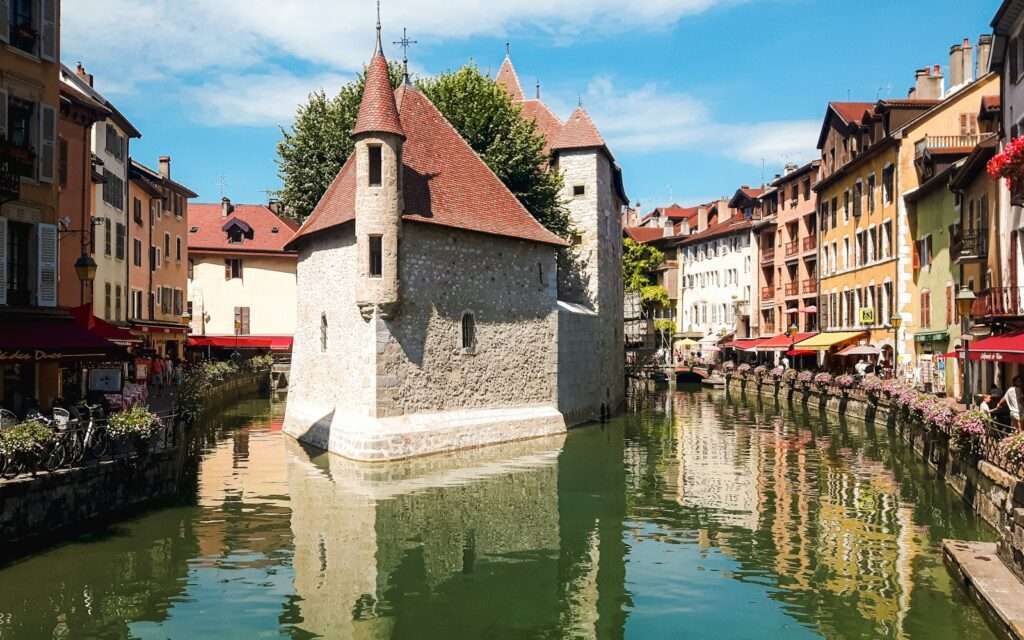
Forty minutes south into France, Annecy is the postcard made real: turquoise canals threading a medieval old town, the Palais de l’Isle — the triangular island prison-turned-icon that is among the most photographed buildings in France — flower boxes at municipal-obsession level, and a lake so clean the town swims in it all summer.
The circuit: the old-town canal loop and Thursday-through-Sunday market rhythm, the château above for the rooftop view, and then the lake itself — the promenade to the Pont des Amours, pedal boats or paddleboards from the front, and the lakeside lawns where the town picnics. The committed rent bikes for the voie verte, the flat lakeside greenway reaching the beaches and villages down the western shore; Talloires, across the water, supplies the fancy-lunch version.
Summer weekends fill the old town by 11 — go early or stay for the evening emptying — the raclette-and-tartiflette economy is aimed at visitors but no worse for it (the Thursday market’s cheese stalls beat the restaurants), and the ID-for-the-border rule applies as with Chamonix. Half day for the town, full day with the lake, and the gentlest entry on this list.
Read the full Annecy day-trip page.
Gruyères & the Cheese Country — The Sweet and the Strange
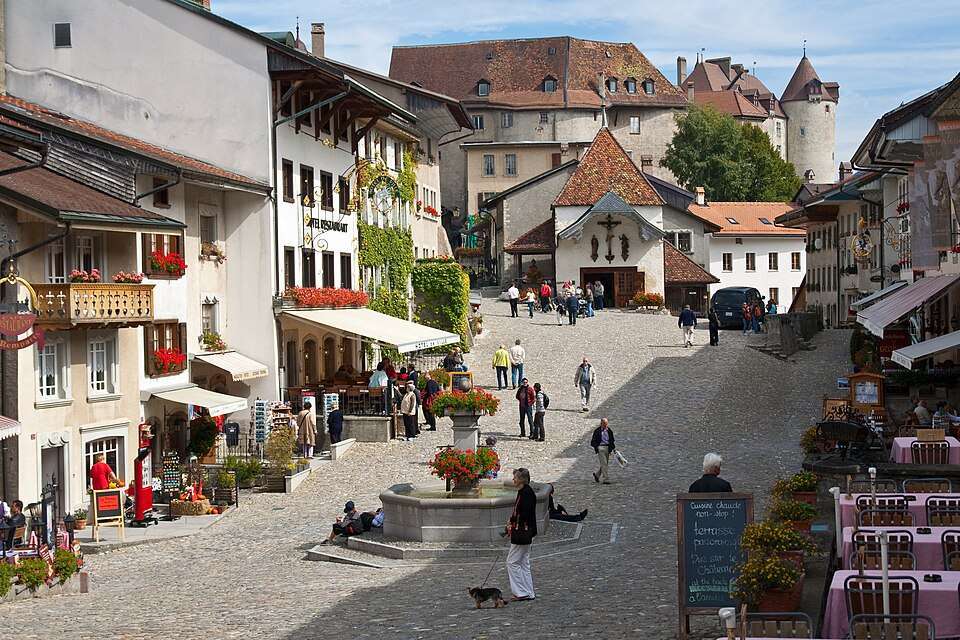
An hour and a quarter northeast, Gruyères is the fairy-tale package with a twist nobody expects. The package: a car-free medieval hilltop village of one cobbled street, the castle at its head with eight centuries of counts’ history and alpine views from the ramparts, and the cheese — La Maison du Gruyère at the hill’s foot runs the working-dairy visit (morning production hours are the ones worth timing), while the meringues-and-double-cream ritual in the village cafés is the region’s dessert argument settled in one bowl.
The twist: the HR Giger Museum — the Alien designer bought a château on the same street, and his biomechanical nightmares now sit fifty meters from the fondue terraces, complete with the Giger Bar’s vertebrae ceilings. The juxtaposition is the single strangest cultural pairing in Switzerland and entirely worth the ticket for anyone with the stomach.
The stack: the Cailler chocolate factory at Broc, fifteen minutes away — the country’s most popular chocolate visit, with the tasting room finale that ends careful eaters — books slots ahead in season. The frame: this is the family-and-food day, train-friendly via the panoramic lines, and best combined as village-plus-two of the three attractions rather than a sprint through all.
Read the full Gruyères day-trip page.
Lausanne & the Olympic Shore — The Museum Day
Thirty-five minutes along the lake, Lausanne stacks a real city onto the day-trip list. The headliner: the Olympic Museum at Ouchy — the IOC’s home town treats the Games as civilization, and the museum (torch relics, medal design, the athletes’ stories told properly) lives up to its reputation as the lake’s best indoor ticket, with terraced gardens running down to the water.
The climb behind it: Lausanne is built on genuine hills — the medieval old town rises to the cathedral, Switzerland’s finest Gothic, where a night watchman still calls the hour from the tower, 10 p.m. to 2 a.m., a tradition running six centuries. The Plateforme 10 arts district beside the station bundles three museums into one block for the culture-dense version; the Collection de l’Art Brut — outsider art assembled by Dubuffet — is the city’s singular oddity and the connoisseur’s pick.
Ouchy’s waterfront handles the rest: the belle-époque hotels, the lake steamers (Lausanne is the hub for the paddle-wheel fleet — the Évian crossing to France takes thirty-five minutes and makes a spa-town lunch run), and the promenade rollerblading culture. The frame: Lausanne pairs naturally with Lavaux next door, and the métro — the world’s smallest city with one — beats the hills.
CERN, the Jet d’Eau & Geneva Itself
CERN first, with the mechanics that matter: the Science Gateway — the physics lab’s flagship visitor center — is free, but registration is required, and online booking (up to one month ahead) guarantees entry where walk-ups depend on space. The truth about the famous guided tours and lab workshops: they cannot be pre-booked online — they’re allocated on-site after check-in, capacity covers only around a tenth of visitors, so arrive at opening and reserve immediately at the desk or your booking page. The exhibitions, science shows, and films fill three-plus hours regardless, under-16s need an adult, tours may cross the Swiss-French border (carry ID), and the tram from Cornavin runs straight there. One more rule from CERN itself: visits are always free — pay no third party claiming otherwise.
The city’s own circuit: the Jet d’Eau’s 140-meter column (walk the jetty and accept the drift-spray baptism), the old town’s climb to St. Peter’s Cathedral and its tower view, the Reformation Wall in the park below, and the Palais des Nations — the UN’s European seat runs guided tours with passport required and online booking ahead. The Bains des Pâquis — the lake baths on their jetty — are the local institution: swim summer, sauna-and-fondue winter, at prices that defy the city around them.
The eating truth: Geneva is expensive even by Swiss standards, and the tools are the Pâquis quarter’s global kitchens, the Coop/Migros terrace picnic with the lake as the dining room, and one deliberate fondue done properly (Bains des Pâquis in winter, or the Vieille Ville classics). Season math: May–September runs the lake life and every mountain above; the Escalade (early December) torches the old town in the city’s own festival; and the bise — the cold north wind — is the one local weather word worth knowing, because it decides whether the lake is a mirror or a whitecap field.
Full day-trip pages: Yvoire.
Frequently Asked Questions
How do you visit CERN?
Free, with registration: book the Science Gateway online up to a month ahead to guarantee entry. Guided tours and lab workshops can’t be pre-booked — they’re allocated on-site after check-in and cover only about a tenth of visitors, so arrive at opening. Never pay a third party; CERN visits are always free.
Do you need to book the Aiguille du Midi?
In season, yes — fine-weather ascent slots sell out, so book online and go early. Respect the altitude at 3,842 meters, check the webcams that morning, and treat Plan de l’Aiguille plus the Mer de Glace railway as the honest half-weather plan.
Is Annecy or Montreux the better lake day?
Different products: Annecy for canals, market, and swimming-lake France; Montreux–Chillon for the Swiss Riviera, Lavaux’s terraces, and the castle Byron carved his name into. Both run gentle; the train-and-steamer version of Chillon wins on style.
What’s the strangest thing in Gruyères?
The HR Giger Museum — the Alien designer’s biomechanical collection sits fifty meters from the meringues-and-double-cream cafés, vertebrae-ceiling bar included. Pair it with the castle and the morning cheese production for the full sweet-and-strange day.
Do you need a passport for the France day trips?
Carry ID — the Chamonix and Annecy crossings are usually a wave-through inside Schengen, and some CERN tours cross the border too. The UN tour is the one Geneva sight that explicitly requires a passport, booked ahead.