Walking the Lavaux Vineyards
An hour along the lake, the monks’ vineyard terraces have stepped down to the water since the 11th century — and the whole visit is a walk between train stations, with Chasselas poured in cellars that keep weekend hours.
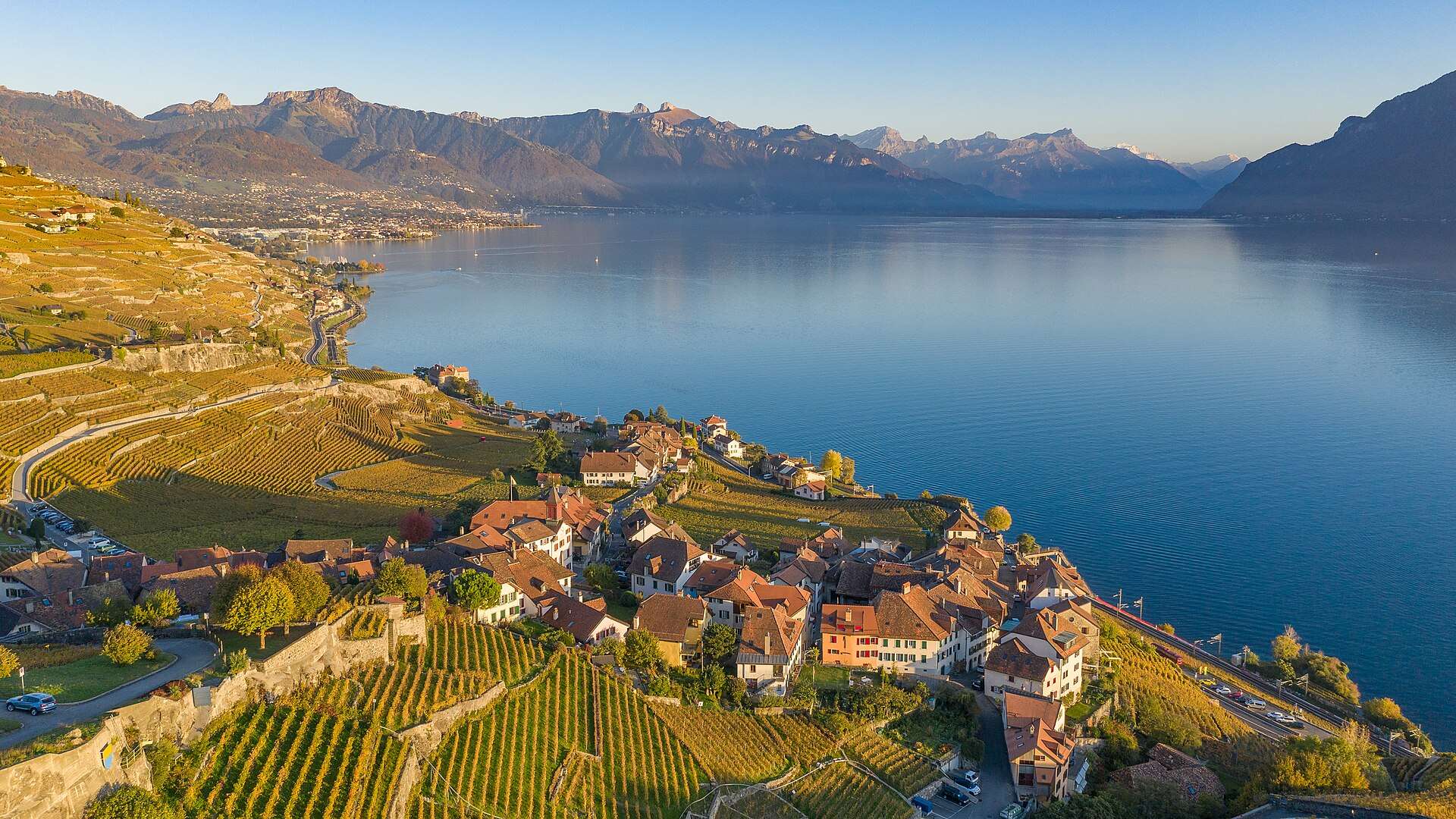
The short version
- Trains run Geneva along the lake to the Lavaux villages in about an hour — sbb.ch — with stations at Lutry, Cully, Epesses, and St-Saphorin turning the terraces into the alarm’s walk-between-stations machine.
- The terraces are a UNESCO World Heritage cultural landscape: roughly 800 hectares of stone-walled vineyard stepping down to Lac Léman, laid out by Benedictine and Cistercian monks from the 11th century and worked continuously since.
- The classic walk runs Lutry to St-Saphorin (or the reverse) in two to three unhurried hours on signed vineyard paths — village detours, lake panoramas, and exit ramps to a train station at every stage per the alarm’s legs-vote clause.
- Chasselas is the grape and the argument: the region’s delicate white, poured in the village caveaux — cooperative cellar-door rooms whose hours cluster on weekends and seasonal evenings, per the alarm’s check-first warning, with Cully and Epesses holding reliable concentrations.
- The locals’ three-suns claim is the terroir explained: the sky’s sun, the lake’s reflection, and the stone walls’ stored heat — marketing with physics behind it, and the reason the slopes ripen at this latitude.
- The Lavaux Express and its sibling road-trains run seasonal hop-through tours for the walk-averse, Vevey at the eastern end adds the Chaplin statue and food-museum layer, and Chillon’s castle (documented on this network) waits along the same shoreline for the greedy day’s extension.

Getting there
The alarm’s structure removes every logistical decision: regional trains stop at the terrace villages every half hour or so, and the walk plans itself station to station — Lutry entry for the west-to-east classic with the lake on your right and the light improving all afternoon. Sunday service runs fine (this is Switzerland), and Sunday is when the caveaux most reliably pour, which makes the weekend the honest first choice despite the extra walkers. Water and sun cover matter more than boots; the paths are farm lanes, not trails.
The day
Start at Lutry’s lakefront and climb into the vines: the paths contour the terraces with the walls doing their three-suns work around you, Cully arriving in an hour as the natural first caveau stop — a chilled Chasselas déci among the growers’ own crowd. Epesses and the Dézaley slopes beyond are the walk’s steep, celebrated heart: the grand-cru wall of vines where the photographs concentrate. St-Saphorin closes the classic route with its stone lanes and church tower against the lake — and its station, per the alarm, takes you home from the exact point your legs retired. Tasting discipline mirrors the wine-country standard: small pours, water, and the knowledge that the train needs no designated anything. The greedy extension rides two more stops toward Montreux for Chillon’s shoreline castle, documented on this network, turning the terrace walk into a full lakeshore day.
When to go
April through October runs the walking season — spring green, summer’s full canopy, and the late-September-to-October harvest gold that is the terraces’ famous fortnight. Harvest itself animates the villages (and closes some paths briefly for the work; signs govern). Summer weekends bring companionable crowds and the most open caveaux; the alarm’s hours-check clause applies hardest to weekday visits, when many cellars rest. Winter strips the vines to their stone architecture — walkable, stark, and accompanied by whichever village restaurant kept its fire lit.
Frequently Asked Questions
How hard is the walk really?
Moderate — farm-lane grades with some genuine climbs between terrace levels, two to three hours for the classic stretch at photo pace. Any station exits it early, per the alarm’s design. Proper shoes beat sandals, sun cover beats regret, and the walk-averse ride the seasonal road-trains over the same slopes.
What does Chasselas actually taste like?
Delicate, dry, faintly mineral — a wine built for the lake terrace it’s poured on, and famously reluctant to travel, which is why the region drinks most of it itself. The caveaux pour it by the déci at friendly prices; the Dézaley and Epesses crus are the names to try against each other.
Are the caveaux hours really that limited?
Limited enough to plan around, per the alarm: most are grower cooperatives staffed in turns, clustering on weekend afternoons and summer evenings, with weekday openings patchy outside high season. Village tourism pages post the rosters. A booked cellar visit settles it for groups; walkers take what’s open and lose nothing.
Can I do Lavaux without any wine at all?
Completely — the walk, the villages, and the lake need no glass, and the terraces’ UNESCO case is landscape, not beverage. Fountains and cafés pace the route. It’s among Switzerland’s best free days; the Chasselas is the optional soundtrack.
Lavaux or Gruyères from Geneva?
Gruyères (documented on this network) for cheese, castle, and the double-cream meringue rite; Lavaux for vines, lake, and the walking day. Indoor pastoral versus outdoor pastoral — and since both run on the same rail spine, the ambitious week does both without once touching a car.